
Learn Without Pressure: The Ultimate Guide to Stress-Free Study
“Have you ever wished to learn without any pressure, yet felt that your brain is a heavy rock? I think that all students read a page and feel their hearts beating fast. Yet, they know that the best way to pass is to learn without any pressure. Yet, did you know that a scared brain literally locks up and forgets things?
In this guide, we’re going to talk about how you can learn without any pressure. This is not about being lazy; this is about being smart and using the true power of your brain. We’re going to talk about how stress works on your brain and how you can harness cool tricks like Gamification, and what people on Quora are saying about how you can learn without any pressure.”
1. The Science: Why You Should Learn Without Pressure

To understand why pressure is bad, we have to look at two important parts of your brain.
The Memory Keeper (Hippocampus)
Think of the Hippocampus as a librarian. Its job is to take the facts you read and put them on the right shelves so you can find them later. When you are calm, the librarian works fast. But when you are stressed, your body sends out a chemical called Cortisol.
According to research from Harvard Health, too much Cortisol makes the librarian tired. The “shelves” in your brain get messy, and that is why you forget the answers during a test, even if you studied all night.
The Alarm System (Amygdala)
There is another part called the Amygdala. This is your brain’s alarm system. It’s great for running away from a lion, but it’s terrible for math. When you feel “Pressure,” this alarm goes off. It shuts down the “Thinking Brain” (Prefrontal Cortex). You cannot think clearly when an alarm is screaming in your head!
2. The “Learn Without Pressure” Framework: Strategies That Work
If we want to learn deeply, we need to keep the librarian happy and the alarm system quiet. Here is how:
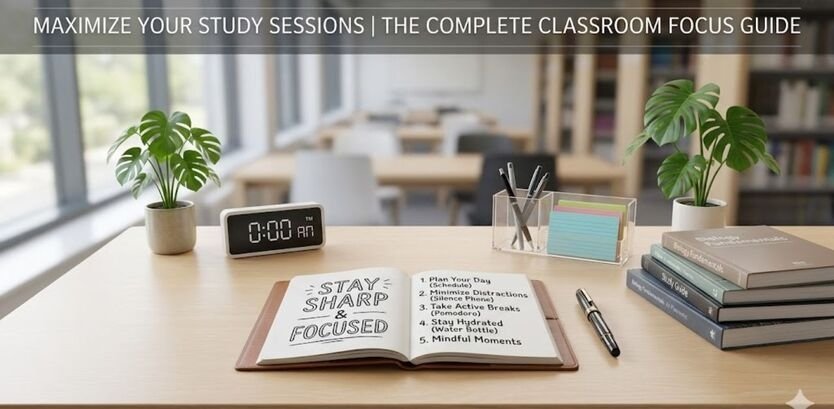
A. The Gentle Pomodoro (The 20-5 Rule)
Most people use a timer like a police officer. “You MUST study for 60 minutes!” That creates pressure. Instead, try the Gentle Pomodoro:
- Set a timer for 20 minutes.
- Tell yourself: “I will just look at this one topic.”
- When the timer dings, stop. Even if you are in the middle of a sentence.
- Take a 5-minute break. Walk, stretch, or drink water.
This tells your brain that “Work is short and breaks are coming.” No alarm goes off.
B. Active Recall — The “Guessing Game”
-
“Instead of reading the same page five times (which is boring and stressful), read it once. Then, close the book. Try to explain what you read to a stuffed toy, a wall, or a friend. This simple habit helps you learn without pressure because it feels like a game.
Why it works: It’s like a game. If you forget something, don’t worry! Just peek at the book and try again. There is no pressure, practice. This is one of the easiest ways to learn without pressure while building strong memory.”
C. Spaced Repetition (The Secret Weapon)
If you want to remember something for years, don’t “cram” it in one night. Use Anki, a cool tool that helps you review things right before you forget them.
- Day 1: Learn it.
- Day 2: Review it.
- Day 4: Review it again.
- Day 10: Review it one last time.
This way, you spend only 5 minutes a day instead of 5 hours. Less time = Less pressure.
3. Community Insights: What the World Says About How to Learn Without Pressure

I searched through community forums to find what “real” people struggle with.
The Quora Struggle: “I feel guilty when I’m not stressed.”
Many students on Quora say they feel like they aren’t “working hard” unless they are crying or tired. This is a big mistake!
- The Truth: Hard work does not have to be painful. The best learners in the world, like those mentioned in Psychology Today, actually enjoy the process. If you are enjoying your study, you are actually learning more than the stressed student.
The Flippa Trend: “Buying Stress-Free Knowledge”
On Flippa (a place where people buy and sell websites), there is a huge jump in “Relaxed Learning” blogs. Why? Because people are tired of “Hustle Culture.” They want to learn skills like coding, art, or languages in a way that feels like a hobby, not a second job.
4. Why You Should Learn Without Pressure (Pros & Cons)
Every method has two sides. Let’s look at them clearly:
| Feature | Learning WITHOUT Pressure ✅ | Learning WITH Pressure ❌ |
| Brain Health | Low stress, better sleep. | High anxiety, burnout. |
| Long-term Memory | You remember it for years. | You forget it after 2 days. |
| Creativity | You find new, cool ideas. | You only follow the rules. |
| Short-term Speed | It feels a bit slower at the start. | It feels very fast (Cramming). |
| Discipline | You need to be your own boss. | The “Fear” is your boss. |
5. How to Change Your Study Environment

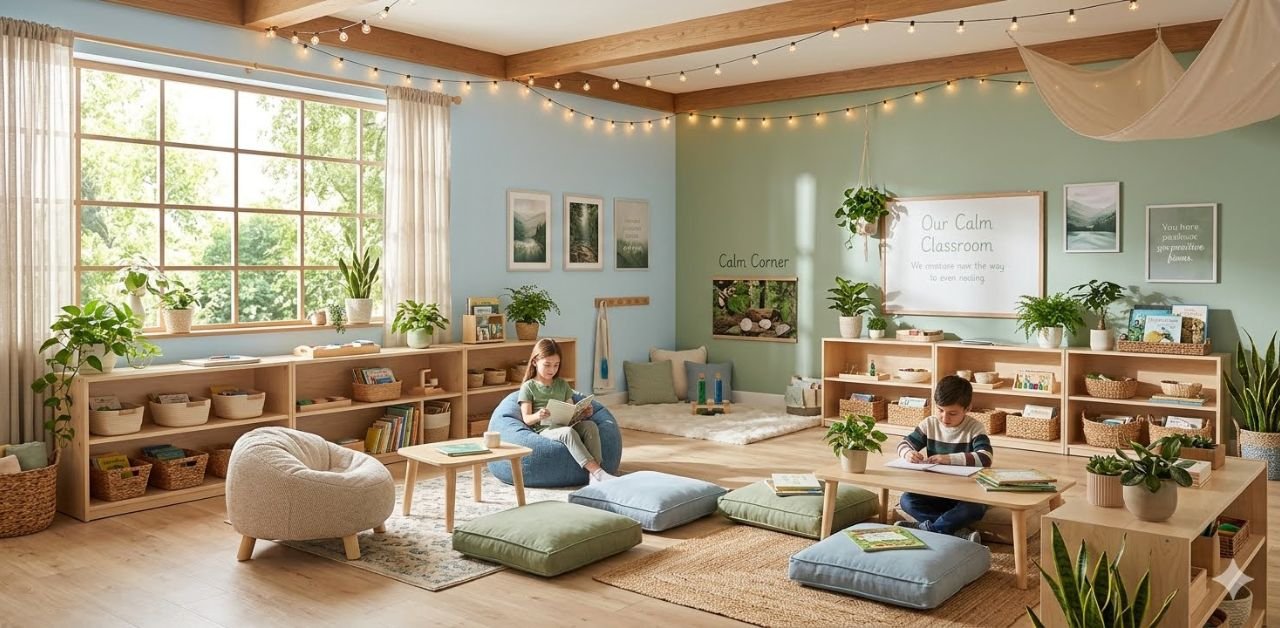
Your room can actually help you feel less pressure.
- Clear the Mess: A messy desk makes a messy mind. Keep only what you need.
- Light Matters: Try to study near a window. Sunlight helps your mood.
- Nature Sounds: Some people like “White Noise” or “Rain Sounds” on YouTube. It blocks out scary noises and helps you focus.
- No Phones: Put your phone in another room. Checking notifications creates “Micro-Pressure” every 5 minutes.
6 . Learning From Mistakes: The “Oops” Method to Learn Without Pressure
In a high-pressure school, making a mistake feels like a disaster. But in a Pressure-Free world, a mistake is just data.
Think of a video game like Minecraft or Roblox. When you fall into lava, you don’t quit forever. You think, “Oops, I shouldn’t jump there,” and you try again. That is how you should look at a Math problem. If you get it wrong, just say “Oops” and try a different way.
7. Summary: Your 3-Step Plan to Learn Without Pressure Tomorrow
If you want to start this journey, just do these three things tomorrow:
- Pick one subject you think is “scary.”
- Set a timer for 15 minutes and tell yourself: “I am just playing with this for a bit.”
- Reward yourself with a 5-minute break (dance to a song, eat a fruit, or pet your cat).
8. How Your Brain Grows Like a Muscle
Did you know that your brain can actually change its shape? Scientists call this Neuroplasticity. Think of your brain like a piece of playdough or a muscle in your arm. When you learn something new without stress, your brain builds “new roads” (called neural pathways) to store that information.
However, when you study under heavy pressure, your brain becomes “stiff.” It’s like trying to build a road during a heavy storm; it’s messy and won’t last long. By choosing to Learn Without Pressure, you are giving your brain the perfect weather to build strong, permanent roads. Every time you relax and enjoy a book, you are literally making your brain bigger and smarter. This is why some people seem to learn things “naturally”—it’s not magic, they just know how to keep their brain relaxed and ready to grow.

Conclusion
The most important thing to remember is that you are a human being. Your brain is a beautiful organ that loves to explore. When we put too much pressure on it, we treat it like a machine.
Learning without pressure is the “Smarter Path.” It makes you a lifelong learner. When you finish school, you won’t want to burn your books—you will want to keep reading because learning has become your favorite hobby.
Choose curiosity. Choose calm. Choose the Learn Without Pressure way.
. Frequently Asked Questions
Q1: My parents want me to study 6 hours a day. What should I do?
Show them your results! When you study without pressure, your grades usually go up. Explain to them that 2 hours of “Deep Focus” is better than 6 hours of “Staring at a book while crying.”
Q2: Is “Learning Without Pressure” okay for difficult subjects like Science?
Actually, it’s better for Science. Science requires you to imagine big ideas (like atoms or space). You cannot imagine things when your brain is in “Panic Mode.”
Q3: Can I use this for my hobbies too?
Yes! Whether you are learning guitar, drawing, or a new language, the rules are the same. Keep it fun, keep it short, and be kind to yourself.
Q4: What if I have a real exam tomorrow?
If you only have one day left, don’t try to learn everything. Pick the 3 most important topics. Use “Active Recall” for those. It is better to know 3 things perfectly than 10 things halfway.
Q5: Does drinking coffee help?
A little bit is okay, but too much makes you shaky. Shaky hands lead to a shaky mind, which feels like… You guessed it… Pressure! Stick to water or juice.