

Meditation for Students: A Simple Guide to Better Focus and Academic Success
Meditation for Students is a simple and effective practice that helps learners improve concentration, reduce stress, and achieve better academic results. In today’s fast-paced world, students face many challenges, including exam pressure, homework, social responsibilities, and digital distractions. These challenges often affect focus, memory, and emotional well-being.
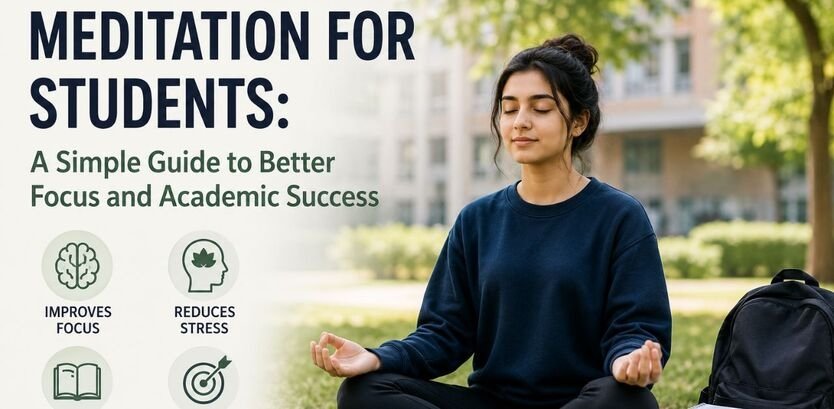
Fortunately, meditation provides a practical solution. By practicing mindfulness regularly, students can train their minds to stay calm, focused, and productive. Even a few minutes of daily meditation can improve learning, confidence, and overall well-being.
What Is Meditation for Students?
Meditation is a mental exercise that helps students focus on the present moment. It encourages awareness of thoughts, breathing, and emotions without judgment. Instead of trying to stop thoughts completely, students learn to observe them and gently return their attention to the present.
Regular meditation strengthens mindfulness and mental clarity. As a result, students become better at handling distractions and staying focused on important tasks.
Why Is Meditation for Students Important?
Student life often comes with academic pressure, deadlines, and social challenges. These responsibilities can create stress and make concentration difficult.
Meditation helps students develop emotional balance and self-awareness. It trains the brain to focus more effectively and respond calmly to challenges. Therefore, students who practice meditation regularly often feel more confident and less overwhelmed.
Benefits of Meditation for Students
How Meditation for Students Improves Focus
One of the biggest benefits of meditation is improved concentration. Students learn how to control distractions and stay focused on the task in front of them.
This skill can improve classroom participation, homework completion, and study efficiency.
How Meditation for Students Reduces Stress
Stress is a common part of academic life. Exams, assignments, and deadlines can create anxiety and frustration.
Meditation promotes relaxation by calming the mind and body. As a result, students often feel more peaceful and better prepared to handle pressure.
Meditation for Students and Better Memory
Memory plays an essential role in learning. Meditation supports memory by improving attention and mental clarity.
When students focus more effectively, they are more likely to remember lessons and retain information for longer periods.
Emotional Benefits of Student Meditation
Meditation encourages emotional awareness and self-control. Students learn how to respond thoughtfully rather than react impulsively.
This can improve confidence, decision-making skills, and relationships with others.
Better Sleep Through Mindfulness for Students
Good sleep is essential for learning and concentration. However, stress and excessive screen time often interfere with sleep quality.
Mindfulness practices help students relax before bedtime, leading to deeper and more refreshing sleep.
How Meditation for Students Supports Academic Success
Better Classroom Attention Through Meditation
Students who meditate regularly often find it easier to pay attention during lessons. They can absorb information more effectively and participate actively in class discussions.
More Effective Study Sessions with Meditation
Meditation helps students remain focused while studying. This reduces distractions and increases productivity.
As a result, study sessions become more efficient and rewarding.
Managing Exam Stress Through Mindfulness
Exams can create nervousness and self-doubt. Mindfulness techniques help students remain calm and focused before and during tests.
A relaxed mind is better able to recall information and solve problems effectively.
Increased Motivation for Students
Meditation promotes self-awareness and goal-oriented thinking. Students become more focused on their priorities and develop stronger motivation to achieve academic success.
Meditation Techniques for Students

Mindfulness meditation focuses on the present moment. Students simply pay attention to their breathing and gently return their focus whenever their minds wander.
Deep Breathing Meditation
Deep breathing is one of the easiest meditation techniques. Slow, controlled breaths help reduce stress and improve concentration.
Guided Meditation for Beginners
Guided meditation involves listening to recorded instructions that help students relax and stay focused. It is particularly useful for beginners.
Body Scan Meditation
A body scan involves paying attention to different areas of the body and releasing tension. This technique promotes relaxation and physical awareness.
Building a Daily Meditation Habit for Students
Developing a meditation habit does not need to be difficult. Students can start with five minutes a day and gradually increase the duration.
Practicing at the same time each day and choosing a quiet location can help build consistency. Over time, meditation becomes a natural part of a healthy routine.
Common Meditation Mistakes Students Make
Many students expect immediate results and become discouraged when changes do not happen instantly.
Another common mistake is trying to eliminate all thoughts. Meditation is not about having a perfectly empty mind. Instead, it involves gently returning attention to the present moment.
Consistency and patience are the keys to long-term success.
Long-Term Benefits of Mindfulness
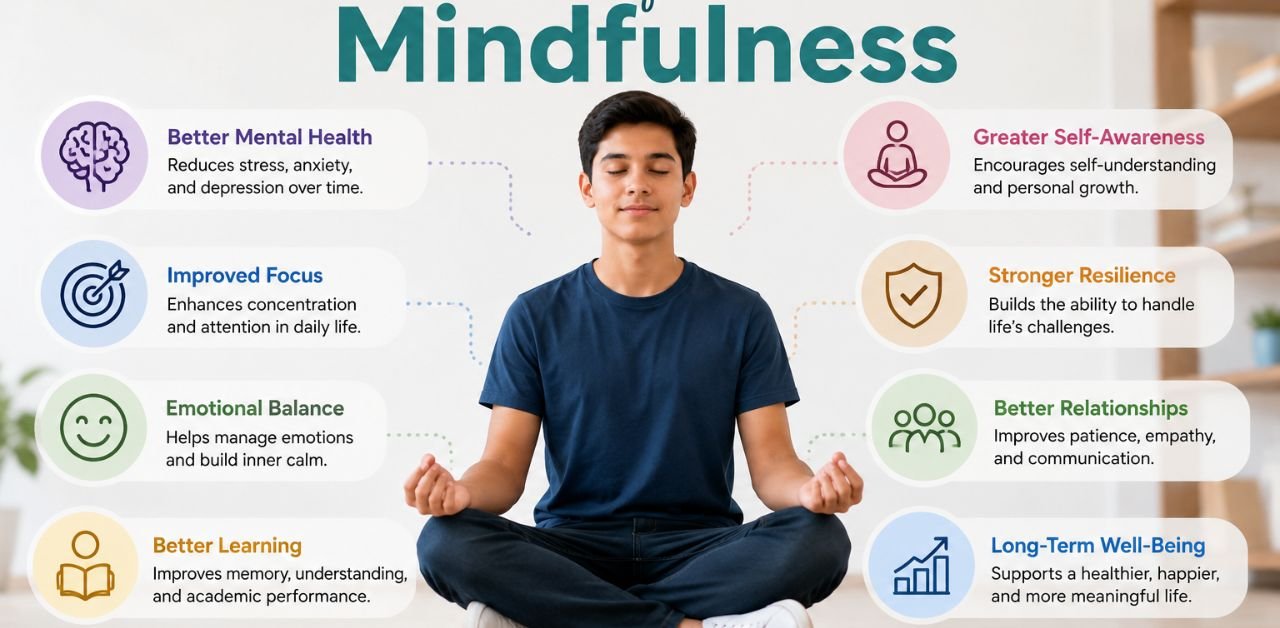
Students who meditate regularly often develop important life skills, including:
- Better self-discipline
- Improved emotional intelligence
- Greater confidence
- Stronger decision-making abilities
- Better stress management
These skills can support success in education, careers, and personal relationships.
Conclusion
Meditation for Students is a powerful habit that can improve focus, reduce stress, and support academic achievement. Through regular mindfulness practice, students can strengthen concentration, improve memory, and develop healthier emotional habits.
Even a few minutes of daily meditation can make a meaningful difference. By starting today, students can build skills that benefit both their education and their future.
Frequently Asked Questions
1. What are the main benefits of meditation for students?
Meditation helps students improve focus, reduce stress, boost memory, enhance emotional well-being, and achieve better academic performance. Moreover, it supports overall mental health and personal growth.
2. How does meditation improve focus and concentration?
Meditation trains the mind to stay present and avoid distractions. As a result, students can pay better attention during classes and study sessions.
3. Can meditation help students reduce exam stress?
Yes, meditation helps calm the mind and lower anxiety levels. Therefore, students often feel more relaxed, confident, and prepared before exams.
4. How long should students meditate each day?
Beginners can start with just 5–10 minutes daily. However, practicing consistently is more important than meditating for long periods.
5. Does meditation improve memory and learning?
Yes, regular meditation improves concentration and mental clarity. Consequently, students can remember information more effectively and learn new concepts faster.
6. What is the best type of meditation for students?
Mindfulness meditation is one of the best options for students because it is simple and effective. In addition, deep breathing and guided meditation are also excellent choices for beginners.